
Getting your first successful harvest isn’t about chasing hype genetics, it’s about stacking the odds in your favor. I’ve seen a lot of first-time grows go sideways not because the grower didn’t care, but because the strain simply wasn’t forgiving. Some genetics demand precision. Others will meet you halfway, even when your watering schedule isn’t perfect or your environment fluctuates a bit.
This guide focuses on strains that actually help beginners succeed. These are reliable, widely available genetics known for stable growth, reasonable timelines, and the ability to handle small mistakes without falling apart.
What Makes a Cannabis Strain Beginner-Friendly?
Before jumping into specific strains, it’s worth understanding what separates a beginner-friendly plant from one that will fight you the whole way.
The easiest strains to grow tend to share a few traits. They’re resilient under stress, meaning they don’t immediately show deficiencies if you slightly overfeed or miss a watering window. They grow with predictable structure, so you’re not constantly trying to manage wild stretching or uneven canopies. They also finish in a reasonable timeframe, which keeps things moving and lets you learn faster.
Another big one is genetic stability. Some strains throw a wide range of phenotypes, which can make your grow unpredictable. For beginners, consistency matters more than uniqueness.
Best Cannabis Strains for Beginners
Northern Lights

If there’s one strain that consistently delivers for new growers, it’s Northern Lights. This one has been around forever for a reason.
It stays compact, which makes it perfect for small indoor setups, and it doesn’t react dramatically to minor mistakes. If your watering isn’t dialed in yet or your environment fluctuates a bit, Northern Lights usually keeps pushing forward.
The flowering time is relatively short, and the plant structure is easy to manage without advanced training techniques.
Best for: Small tents, first-time indoor grows, low-maintenance setups
Blue Dream

Blue Dream is a great “confidence builder” strain. It grows vigorously and adapts well whether you’re indoors or outdoors.
One thing I like about Blue Dream is how responsive it is. If you make adjustments to lighting, nutrients, or airflow, you’ll actually see the plant react in a positive way. That feedback loop helps beginners learn faster.
It can stretch a bit, so you may need light training, but nothing complicated. Watch for vertical growth, you might need to top it.
Best for: Growers who want strong yields without overly complicated care
White Widow

White Widow is one of the more forgiving strains when it comes to environmental stress. It handles humidity swings and minor nutrient issues better than most.
The structure stays fairly balanced, which means you won’t spend much time correcting uneven growth. It’s a solid “set it up right and let it grow” type of strain.
Best for: Beginners who want a low-maintenance, consistent grow
Blueberry

Blueberry is a solid option if you want something visually rewarding without being overly difficult.
It tends to stay manageable in size and produces dense, flavorful buds. The only thing to watch is nutrient sensitivity as it doesn’t need heavy feeding. Start with less nutrients than you think you need and increase from there.
Best for: Flavor-focused growers who still want an easy experience
Green Crack

If you want something that grows fast and keeps you engaged, Green Crack is a strong choice.
It moves quickly in the vegetative stage, which gives you more opportunities to observe growth patterns and learn how your setup affects the plant. Faster cycles also mean quicker feedback, which is huge early on.
It can stretch, but basic techniques like topping or low-stress training are enough to manage it.
Best for: Faster harvest cycles and hands-on learners
Granddaddy Purple

This is a good choice if you’re working with limited vertical space. Granddaddy Purple stays relatively short and bushy, making it easier to control indoors.
It’s also fairly predictable in structure, which means less guesswork when it comes to canopy management.
Best for: Small grow spaces and indica-leaning setups
Best Autoflower Strains for Beginners
If you want to simplify things even further, autoflowers are worth considering. They don’t rely on light cycle changes to start flowering, which removes one of the biggest variables for new growers.
Easy Bud (Autoflower)

This one is bred specifically with beginners in mind. Easy Bud Auto stays small, grows quickly, and doesn’t require much intervention.
You won’t get massive yields, but you will get a straightforward growing experience.
Best for: First-ever grow with minimal complexity
Northern Lights Auto

Northern Lights Auto takes everything that makes Northern Lights easy and adds the speed of an autoflower.
It’s compact, resilient, and finishes quickly. If your goal is to get through your first harvest with as few complications as possible, this is a strong option.
Best for: Quick, low-stress indoor grows
Still don’t know if you should grow a photoperiod or an autoflower strain? Click here – Photoperiod vs. Autoflower
Strains Beginners Should Be Careful With
It’s just as important to know what to avoid early on.
Some strains are popular but not beginner-friendly. They may require precise feeding, strict environmental control, or advanced training techniques to perform well.
For example, certain diesel-heavy strains can be sensitive and unpredictable. Some OG genetics are known for nutrient sensitivity. Others stretch aggressively and become difficult to manage in small spaces.
That doesn’t mean you should never grow them, it just means they’re better tackled once you’ve got a few successful runs under your belt.
Indoor vs Outdoor: Choosing the Right Strain for Your Setup
Your environment plays a huge role in how beginner-friendly a strain feels.
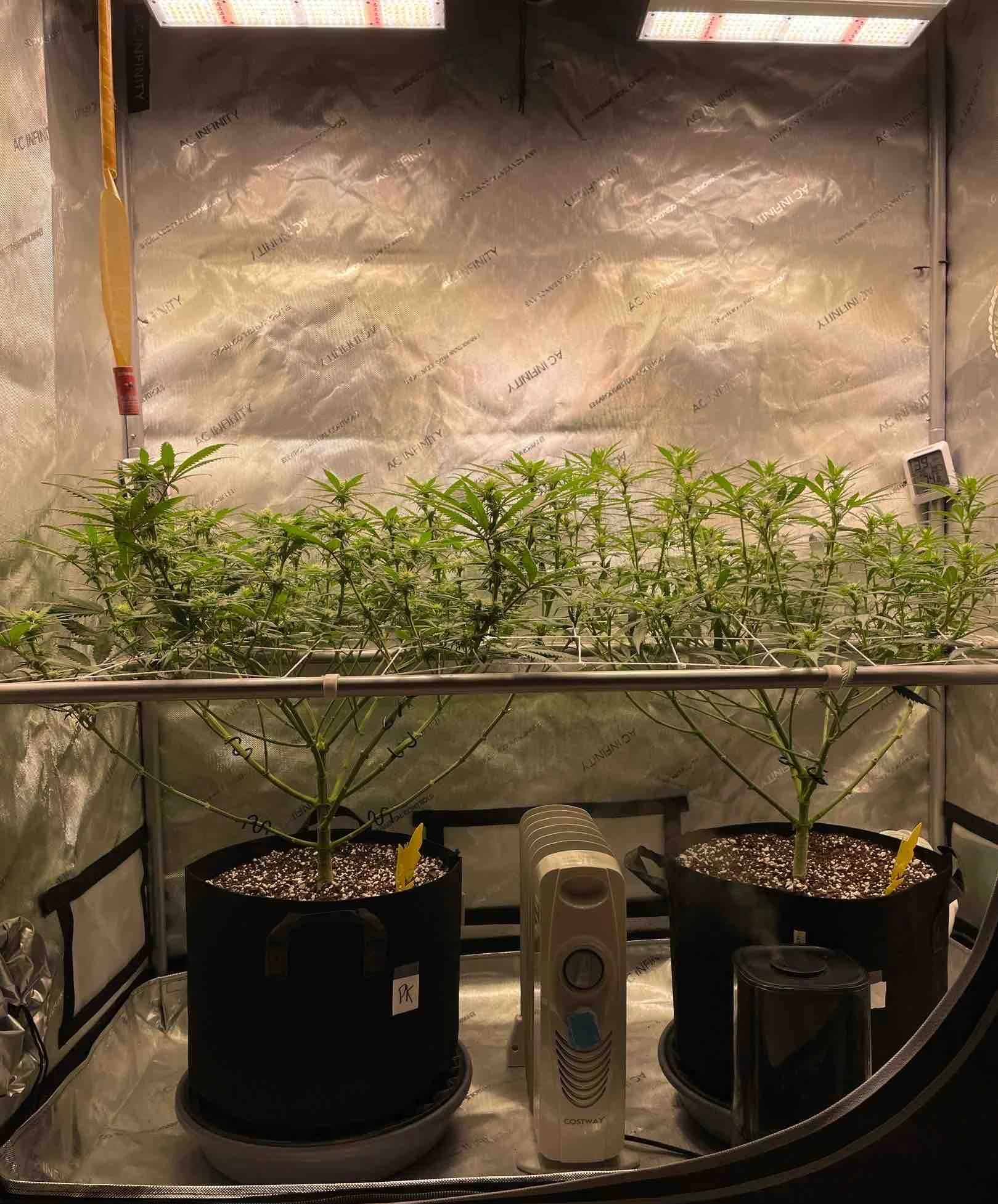
Indoors, you’ll want strains that stay compact and respond well to controlled lighting. Northern Lights and Granddaddy Purple are great examples.
Outdoors, you can lean toward more vigorous growers like Blue Dream, since space and light are less restrictive.
If you’re unsure, start with something adaptable. Strains like White Widow and AK-47 tend to perform well in a range of conditions.
How to Pick the Right Strain for Your First Grow
Instead of overthinking it, focus on a few practical factors.
Look at your available space first. If you’re working with a small tent, avoid strains known for extreme height. Next, consider how much time you want to invest. Fast flowering strains or autoflowers will get you to harvest quicker.
Also think about your goals. If you’re more interested in learning the process, go with something forgiving. If yield is your priority, choose a strain known for strong production but still beginner-friendly.
And don’t underestimate availability. Stick with well-known, widely distributed genetics for your first run. That alone reduces a lot of risk.
Start with the Right Strain and Everything Gets Easier
Your first grow sets the tone for everything that comes after it. Choosing the right strain won’t guarantee success, but it removes a lot of unnecessary friction.
Once you’ve gone through a full cycle and understand how your setup behaves, you can start experimenting with more demanding genetics.
For now, keep it simple, stay consistent, and let the plant do most of the work.
Helpful Links:
Complete Beginner Indoor Grow Guide
Cannabis Seed Finder (app)
Best Growing Medium for Cannabis Plants
Frequently Asked Questions (FAQs)
Northern Lights is widely considered one of the easiest strains to grow. It’s resilient, stays compact, and handles common beginner mistakes better than most.
Autoflowers can be easier because they don’t require light cycle changes to start flowering. However, they have less room for error if something goes wrong early, since they grow on a fixed timeline.
Most beginner-friendly photoperiod strains take around three to four months from seed to harvest. Autoflowers can finish in as little as eight to ten weeks.
Blue Dream and Green Crack are both known for producing strong yields while still being manageable for new growers.
Indica-dominant strains are usually easier for beginners because they stay shorter and more compact. That makes them easier to manage indoors.
Yes. “Beginner-friendly” doesn’t mean low quality. Many of these strains are popular specifically because they balance ease of growth with strong potency and flavor.

Savage has been growing cannabis for 5+ years and founded The HighWay to share honest, tested information with the cannabis community.



Leave a Reply