
Table of contents
- What Does Growing Cannabis Organically Actually Mean?
- Organic Growing vs Synthetic Nutrients
- Why More Growers Are Switching to Organic Soil
- Organic Growing Isn’t Completely Hands-Off
- Challenges You Should Know Before Switching
- Is Organic Growing Right for You?
- Organic Cannabis Soil Amendments Explained
- Which Amendments Are Truly Essential?
- Building Your Amendment Collection Over Time
- Organic Cannabis Soil Recipes That Actually Work
- Recipe #1: The Easiest Organic Cannabis Soil Mix
- Recipe #2: Beginner Water-Only Living Soil
- Recipe #3: Intermediate Living Soil Blend
- Recipe #4: Advanced Living Soil
- How Much Soil Do You Need?
- When Should You Top Dress?
- Watering Organic Soil Is Different
- Mulch Makes a Bigger Difference Than Most Growers Expect
- Should You Use Compost Tea?
- Can You Reuse Organic Soil?
- Common Organic Growing Mistakes
- Organic Growing Doesn’t Have to Be Complicated
- Frequently Asked Questions About Growing Cannabis Organically
- Build a Living Soil That Improves With Every Grow
- Ready to Build Your Own Organic Cannabis Soil?
- Beginner Organic Growing Kit
- Advanced Living Soil Kit
Growing cannabis organically isn’t simply about replacing bottled nutrients with dry fertilizers. It’s an entirely different way of feeding your plants. Instead of delivering nutrients directly to the roots, you’re feeding the soil and the billions of microorganisms living inside it. Those microbes break organic matter down into forms that cannabis plants can naturally absorb as nutrients.
For many growers, organic cultivation produces healthier plants, richer aromas, and a more forgiving growing environment. Others appreciate the lower maintenance, fewer nutrient bottles, and reduced chance of overfeeding.
That doesn’t mean organic growing is perfect for every situation. Building a healthy living soil takes planning, patience, and an understanding of how different amendments work together.
Whether you’re mixing your own soil from scratch or looking for a simple top-dressing routine, this guide covers everything you need to know to grow cannabis organically.

What Does Growing Cannabis Organically Actually Mean?
Organic cannabis cultivation focuses on creating healthy soil instead of feeding the plant directly.
Rather than relying on concentrated mineral salt nutrients, organic growers build a living ecosystem filled with bacteria, fungi, protozoa, nematodes, earthworms, and beneficial insects. These organisms convert organic matter into plant-available nutrients over time.
The amendments you mix into your soil become long-term food sources. Microbial life slowly breaks them down as your cannabis plants need them, creating a more natural nutrient cycle.
This is why many organic growers rarely measure electrical conductivity (EC) or parts per million (PPM). Instead, they focus on maintaining healthy soil biology.
Organic Growing vs Synthetic Nutrients
Both methods can produce excellent cannabis, but they work very differently.
| Feature | Organic Growing | Synthetic Feeding |
|---|---|---|
| Nutrient source | Dry organic amendments, compost, worm castings, and living soil microbes gradually release nutrients. | Mineral salt fertilizers provide nutrients directly in plant-available forms. |
| Feeding frequency | Usually mixed into the soil before planting, then supplemented with occasional top dressings or compost teas. | Nutrients are typically mixed into the water at most or every watering according to a feeding schedule. |
| Risk of nutrient burn | Low. Slow nutrient release makes overfeeding less common, though it can still happen with excessive amendments. | Moderate to high. Incorrect nutrient concentrations can quickly cause nutrient burn or lockout. |
| Soil biology | Encourages beneficial bacteria, fungi, earthworms, and other microorganisms that support plant health. | Limited microbial activity unless biological additives are intentionally introduced. |
| Water-only potential | Yes. A well-built living soil can often support plants through much of the grow with only dechlorinated water. | No. Plants require regular nutrient applications throughout the grow cycle. |
| Initial setup cost | Moderate to high. Building a quality living soil requires several amendments upfront, but many can be reused. | Usually lower. Fewer products are needed initially, though nutrients must be purchased regularly. |
| Ease for beginners | Forgiving once the soil is established, but requires planning and an understanding of soil building. | Easier to start with because nutrients are straightforward to measure, but mistakes can happen quickly. |
| Flavor potential | Many growers report richer terpene profiles and more complex flavors when plants are grown in healthy living soil. | Can produce excellent flavor and potency when managed properly, though some growers prefer the results from organic systems. |
| pH management | Living soil helps buffer small pH fluctuations, so frequent adjustments are often unnecessary. | pH should be monitored and adjusted regularly to maximize nutrient uptake. |
| Long-term soil reuse | Excellent. Soil can often be reamended and reused for multiple growing cycles. | Limited. Growing media may accumulate salts over time and often require replacement or extensive flushing. |
One isn’t universally better than the other.
Synthetic nutrients offer precision and fast corrections when deficiencies appear. Organic growing offers stability, healthier soil biology, and the ability to reuse your growing medium for multiple harvests. Many experienced growers even combine both methods using organic soil with occasional supplemental nutrients.
Why More Growers Are Switching to Organic Soil
Organic cultivation has become increasingly popular because it simplifies many parts of the growing process.
Instead of constantly adjusting nutrients, growers spend more time maintaining healthy soil and less time chasing deficiencies.
Some of the biggest advantages include:
Richer terpene development
Many growers believe organically grown cannabis develops more complex aromas and flavors because plants receive a wider spectrum of naturally occurring micronutrients.
While genetics remain the biggest factor, healthy living soil can help plants fully express their terpene potential.

Lower chance of nutrient burn
Organic nutrients release slowly. Unlike synthetic fertilizers that immediately flood the root zone with available nutrients, most organic amendments require microbial activity before becoming available.
That slower release creates a larger margin for error. Beginners will appreciate how forgiving organic soil can be compared to liquid nutrient schedules.
Learn more about which synthetic and organic nutrients are best to use >>
Improved soil structure
Healthy soil isn’t just about nutrients.
Organic matter improves:
- Water retention
- Aeration
- Root oxygen
- Drainage
- Microbial diversity
- Long-term soil health
These improvements create stronger root systems capable of supporting larger plants.
Reusable soil saves money
One of the biggest long-term advantages is that living soil can often be reused.
Instead of throwing away potting soil after every harvest, growers can:
- Remove old root balls
- Add fresh compost
- Top dress amendments
- Reintroduce beneficial microbes
- Allow the soil to rest before planting again
Over time, this can significantly reduce growing costs.
Healthy living soil often becomes more productive with each growing cycle.
Fewer bottles and less mixing
Many bottled nutrient schedules require multiple products throughout the grow cycle.
Organic systems often replace those bottles with dry amendments, compost, worm castings, and occasional compost teas.
For many home growers, watering becomes much simpler. Instead of mixing nutrients every other time you water, you’re often watering with just plain, dechlorinated water while allowing the soil ecosystem to do the work.
Organic Growing Isn’t Completely Hands-Off
One of the biggest misconceptions is that organic cannabis grows itself. While it can reduce day-to-day feeding, it still requires planning.
Unlike synthetic nutrients, if you’re leaves start turning yellow, they can’t always be corrected overnight. If your soil lacks phosphorus or potassium halfway through flowering, adding dry amendments today may not fully solve tomorrow’s deficiency because those nutrients still need time to break down.
Planning ahead is one of the biggest skills organic growers develop.
Challenges You Should Know Before Switching
Organic cultivation has plenty of advantages, but it’s important to understand where it can become more difficult.
Nutrients release slowly
Microbes control nutrient availability. Cold soil, poor microbial activity, or excessive drying can slow nutrient release.
This is why consistent watering practices become especially important.
Building soil takes patience
Many organic growers “cook” or condition their soil for several weeks before planting. This resting period allows microbial populations to establish while amendments begin to break down.
Freshly mixed soil isn’t always ready for immediate use.
Every soil mix behaves differently
Two growers using the exact same amendments can have completely different results depending on:
- Compost quality
- Water source
- Pot size
- Temperature
- Humidity
- Microbial activity
Organic growing becomes more about observation than following an exact feeding chart.
It can attract beneficial and unwanted organisms
Healthy soil naturally contains life. Most of it is beneficial though!
Occasionally growers may also encounter fungus gnats or other soil-dwelling pests if moisture levels stay too high. Good watering habits and proper airflow usually minimize these issues.
Is Organic Growing Right for You?
Organic cannabis cultivation works especially well if you enjoy gardening as much as harvesting.
If you like building soil, composting, improving biodiversity, and creating sustainable growing systems, you’ll likely enjoy organic cultivation. If you prefer complete precision, instant nutrient adjustments, and highly controlled feeding schedules, then synthetic nutrients may better match your growing style.
Many successful home growers eventually find themselves somewhere in the middle, combining organic soil with occasional supplements when needed (aka synganic). The important thing is understanding how each approach works so you can choose the system that fits your goals.

Organic Cannabis Soil Amendments Explained
Once you understand that organic growing is really about feeding the soil instead of feeding the plant, the next question becomes obvious.
What should you actually put in the soil?
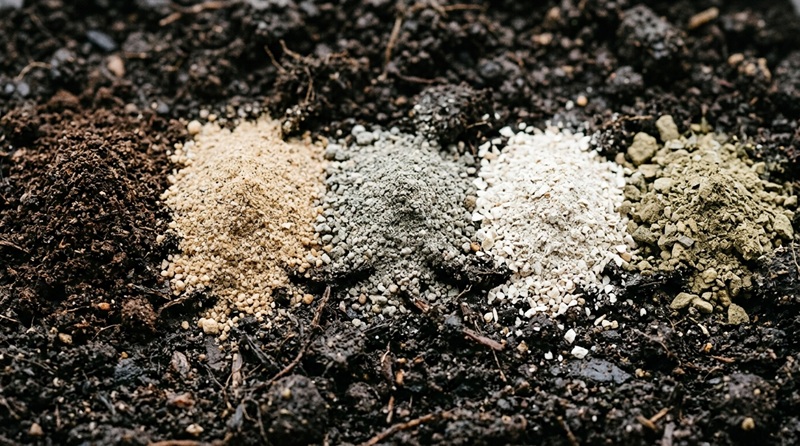
Many successful cannabis growers use fewer than six amendments, while experienced living soil enthusiasts may use fifteen or more. Below are the most common organic amendments used for growing cannabis and what each one contributes.
Worm Castings: The Foundation of Living Soil
If you only add one amendment to your cannabis soil, make it worm castings.
Produced by composting worms, worm castings are packed with beneficial bacteria, fungi, enzymes, humic substances, and readily available nutrients. They’re one of the safest amendments you can use because they are extremely difficult to overapply.
Benefits include:
- Improves soil biology
- Adds beneficial microbes
- Helps retain moisture
- Provides gentle nutrients
- Improves soil structure
- Buffers nutrient availability
Worm castings are commonly used:
- When mixing fresh soil
- During transplanting
- As a top dressing
- In compost teas
- To rejuvenate reused soil
A quality worm casting product should smell earthy, feel soft, and contain plenty of organic matter.
The HighWay’s Recommended Worm Castings:
– Wiggle Worm Worm Castings
– Gaia Green Worm Castings
– Brut Worm Farms Organic Warm Castings
Compost Brings Life to Your Soil
Good compost is much more than decomposed leaves. Properly finished compost contains billions of microorganisms that help cycle nutrients throughout your grow.
High-quality compost also introduces:
- Beneficial bacteria
- Fungi
- Humic acids
- Trace minerals
- Organic matter
Poor compost can introduce weed seeds, pests, or inconsistent nutrient levels, while mature compost becomes one of the best long-term soil builders available.
Many growers use compost alongside worm castings rather than choosing one over the other.
Kelp Meal Provides More Than Potassium
Many new growers assume kelp meal is simply an organic potassium fertilizer. But kelp is one of the most complete organic amendments available. It contains potassium, micronutrients, natural plant hormones, amino acids, and carbohydrates that feed microbes.
Kelp meal encourages vigorous root development, stronger branching, and improved stress resistance. It’s commonly included in nearly every living soil recipe because of its broad nutritional profile.
Best uses include:
- Base soil mixes
- Top dressing
- Compost teas
Alfalfa Meal Encourages Strong Vegetative Growth
Alfalfa meal is an excellent nitrogen source that also contains natural growth-promoting compounds.
One of its unique components is triacontanol, a naturally occurring plant stimulant that helps encourage vigorous vegetative growth.
Alfalfa meal works especially well during:
- Soil building
- Vegetative growth
- Compost production
Because it breaks down fairly quickly, it’s often paired with slower-release amendments. Too much alfalfa can create excess heat while decomposing, which is one reason many growers allow freshly mixed soil to mature before planting.
Neem Seed Meal Feeds Plants While Supporting Soil Health
Neem seed meal has become a favorite among organic cannabis growers. Besides supplying nutrients, many growers believe it helps create a healthier soil environment that discourages certain soil pests.
Neem meal contributes nitrogen, calcium, sulfur, and organic matter. It also serves as food for beneficial microbes.
Many living soil recipes include neem meal as a long-term nutrient source rather than relying on it for pest control alone.
Crab Meal Supplies Calcium Naturally
Cannabis plants consume large amounts of calcium throughout their life cycle.
Crab meal provides:
- Calcium
- Phosphorus
- Chitin
Chitin is especially interesting because many growers believe it stimulates beneficial microbial activity within the soil.
Crab meal breaks down slowly, making it a dependable long-term amendment.
Fish Bone Meal Supports Flower Development
When cannabis transitions into flowering, phosphorus demand increases significantly.
Fish bone meal provides:
- Phosphorus
- Calcium
Many growers prefer fish bone meal over traditional bone meal because it generally becomes available more readily while also supplying additional minerals.
It’s commonly included in bloom-focused soil recipes.
Bone Meal Is a Classic Organic Phosphorus Source
Bone meal has been used in gardens for generations. It releases phosphorus gradually while also contributing calcium.
Unlike bottled bloom nutrients, bone meal isn’t intended for quick corrections.
Instead, it’s added before planting so nutrients become available gradually throughout flowering.
Blood Meal Delivers Fast Organic Nitrogen
Blood meal is one of the strongest natural nitrogen amendments available.
Because it releases relatively quickly, it’s often used carefully. Too much blood meal can produce excessive leafy growth while delaying flower production.
Many living soil growers actually skip blood meal entirely in favor of slower nitrogen sources like:
- Alfalfa meal
- Neem meal
- Compost
- Worm castings
Feather Meal Offers Long-Term Nitrogen
Feather meal breaks down much more slowly than blood meal.
It becomes useful in larger containers where cannabis plants will spend several months growing.
Many commercial organic soil blends include feather meal because it provides nitrogen over an extended period.
Gypsum Adds Calcium Without Raising Soil pH
Many growers confuse gypsum with agricultural lime.
Although both contain calcium, they behave very differently.
Gypsum supplies calcium and sulfur. Unlike lime, gypsum has very little effect on soil pH.
This makes it especially useful for cannabis growers who already have an appropriate pH but want additional calcium.
Dolomite Lime Buffers Soil Acidity
Dolomite lime serves two important purposes.
It supplies calcium and magnesium. It also helps stabilize soil pH over time.
Many peat-based cannabis soil mixes include a small amount because peat moss naturally becomes acidic.
Too much dolomite lime can create nutrient imbalances, so moderation is important.
Basalt Rock Dust Replaces Lost Minerals
Modern soils often lack trace minerals that plants evolved with. Basalt rock dust slowly replenishes dozens of micronutrients while also feeding microbial communities.
Unlike fertilizers, rock dust isn’t intended to provide large amounts of nitrogen, phosphorus, or potassium. Instead, it improves long-term mineral diversity.
Glacial Rock Dust Offers Broad Mineral Diversity
Glacial rock dust serves a similar role to basalt. It introduces a wide range of naturally occurring minerals that become available very slowly.
Some growers prefer basalt, others prefer glacial rock dust, and many use both.
Since applications are relatively small, one bag often lasts through multiple growing seasons.
Biochar Creates Long-Term Microbial Habitat
Biochar is essentially charcoal produced under controlled conditions. Its highly porous structure creates tiny spaces where beneficial microorganisms can live.
Biochar can also improve:
- Water retention
- Nutrient retention
- Soil aeration
Fresh biochar should usually be charged beforehand use by soaking it in compost tea, worm casting tea, or nutrient-rich compost. Otherwise, it may temporarily absorb nutrients from the surrounding soil.
Bat Guano Still Has Its Place
Bat guano was once one of the most popular cannabis fertilizers available.
Today, many growers choose more sustainable alternatives, but quality guano remains an effective source of nutrients.
Depending on the product, bat guano may supply:
- Nitrogen
- Phosphorus
- Trace minerals
Different guano products vary considerably, so always read the guaranteed analysis before purchasing.
Mycorrhizal Fungi Help Expand the Root System
Unlike fertilizers, mycorrhizal inoculants contain beneficial fungi.
These fungi colonize plant roots and create an extended underground network that helps cannabis absorb:
- Water
- Phosphorus
- Micronutrients
Mycorrhizae work best when placed directly against roots during transplanting.
Applying them to the soil surface later is generally much less effective.
Which Amendments Are Truly Essential?
It’s easy to become overwhelmed by enormous amendment lists. Fortunately, you don’t need every ingredient to grow some top-sehlf weed.
For most home growers, these five amendments provide an excellent foundation:
| Amendment | Primary Purpose |
| Worm castings | Biology and gentle nutrition |
| Compost | Microbial diversity |
| Kelp meal | Micronutrients and potassium |
| Gypsum | Calcium and sulfur |
| Basalt or glacial rock dust | Trace minerals |
Everything more than the amendments above can be viewed as fine tuning.

Building Your Amendment Collection Over Time
There’s no need to purchase ten different products before your first organic grow. Many successful growers start with just a quality organic soil, worm castings, and one balanced organic fertilizer.
As you gain experience, you can gradually introduce additional amendments based on your growing style and the needs of your garden.
The goal isn’t to own the biggest collection of soil amendments. It’s to build a healthy, biologically active growing medium that consistently produces vigorous plants and dank, resin-packed flowers.
In the next section, we’ll put these ingredients to work by creating complete organic soil recipes ranging from beginner-friendly mixes with only a few ingredients to advanced living soil blends used by experienced organic cannabis growers. We’ll also cover exact mixing ratios, top-dressing schedules, and recommendations for 5-gallon and 10-gallon fabric pots.
Organic Cannabis Soil Recipes That Actually Work
Now that you know what each amendment provides, it’s time to put everything together.
One of the biggest misconceptions about organic growing is that there’s only one “perfect” soil recipe. In reality, successful growers use everything from simple two-ingredient mixes to highly customized living soils with more than a dozen amendments.
The best recipe depends on your goals, experience level, budget, and how involved you want to be throughout the grow. If you’re just getting started, keep it simple. You can always add more later.
Recipe #1: The Easiest Organic Cannabis Soil Mix
This recipe is ideal if you’re new to organic growing or want to minimize maintenance.
Ingredients
- High-quality potting soil
- Worm castings
- Balanced organic all-purpose fertilizer
A great example would be:
- FoxFarm Happy Frog Potting Soil
- Wiggle Worm Worm Castings
- Dr. Earth Home Grown or All Purpose 2-2-2
Mixing Ratio
For every 5 gallons of soil:
- 5 gallons of potting soil
- 2 to 4 cups worm castings
- 1 to 1½ cups organic all-purpose fertilizer
Mix thoroughly and lightly moisten the soil. Let it sit for about one week before planting if possible.
This mix provides enough nutrition for several weeks while establishing healthy microbial activity.
Products Used in This Mix:
– FoxFarm Happy Frog
– Wiggle Worm Worm Castings
– Dr. Earth All Purpose 4-4-4
Recipe #2: Beginner Water-Only Living Soil
This recipe requires a few more ingredients but can often support an entire grow with little more than just water and occasional top dressing.
Base Mix
Per cubic foot of soil:
- 1 part peat moss or coco coir
- 1 part compost
- 1 part aeration material (perlite, pumice, or rice hulls)
Amendments
Per cubic foot:
- 2 cups worm castings
- ½ cup kelp meal
- ½ cup neem seed meal
- ½ cup gypsum
- 2 cups basalt or glacial rock dust
Allow the mix to rest for 3 to 4 weeks before planting. This gives microbial populations time to establish and begins breaking down the amendments.
Recipe #3: Intermediate Living Soil Blend
This recipe offers a wider nutrient profile while remaining fairly easy to manage.
Base
- 1 part peat moss
- 1 part compost
- 1 part aeration (perlite, pumice, or rice hulls)
Dry Amendments (per cubic foot)
- 2 cups worm castings
- ½ cup kelp meal
- ½ cup alfalfa meal
- ½ cup crab meal
- ½ cup fish bone meal
- ½ cup neem seed meal
- ½ cup gypsum
- 2 cups basalt rock dust
- 1 cup biochar (charged)
This blend supports vigorous vegetative growth while providing enough phosphorus and calcium for flowering.
Most growers only need to top dress once or twice during the grow.
Recipe #4: Advanced Living Soil
Experienced organic growers often use recipes similar to this.
Base
- 1 part peat moss
- 1 part compost
- 1 part aeration (perlite, pumice, or rice hulls)
Amendments Per Cubic Foot
- 2 cups worm castings
- ½ cup kelp meal
- ½ cup neem meal
- ½ cup crab meal
- ½ cup fish bone meal
- ½ cup alfalfa meal
- ¼ cup feather meal
- ½ cup gypsum
- ½ cup dolomite lime
- 2 cups basalt rock dust
- 1 cup biochar
- Mycorrhizal inoculant at transplant
Many growers let this soil mature for at least a month before planting.
The microbial community becomes increasingly active during this time.

How Much Soil Do You Need?
Different container sizes require different amounts of amendments.
5-Gallon Pot
Approximate soil needed:
- 0.67 cubic feet
7-Gallon Pot
Approximate soil needed:
- 0.94 cubic feet
10-Gallon Pot
Approximate soil needed:
- 1.34 cubic feet
15-Gallon Pot
Approximate soil needed:
- 2 cubic feet
| Container Size | Soil Needed (Cubic Feet) | Soil Needed (Approx. Gallons) | Recommended Amendment Amounts* |
|---|---|---|---|
| 3 Gallon | 0.40 cu ft | 3 gal | 1–2 cups worm castings, ¼ cup all-purpose organic fertilizer |
| 5 Gallon | 0.67 cu ft | 5 gal | 2–4 cups worm castings, 1–1½ cups all-purpose organic fertilizer |
| 7 Gallon | 0.94 cu ft | 7 gal | 3–5 cups worm castings, 1½–2 cups all-purpose organic fertilizer |
| 10 Gallon | 1.34 cu ft | 10 gal | 4–6 cups worm castings, 2–3 cups all-purpose organic fertilizer |
| 15 Gallon | 2.00 cu ft | 15 gal | 6–8 cups worm castings, 3–4 cups all-purpose organic fertilizer |
| 20 Gallon | 2.67 cu ft | 20 gal | 8–10 cups worm castings, 4–5 cups all-purpose organic fertilizer |
| 30 Gallon | 4.00 cu ft | 30 gal | 12–16 cups worm castings, 6–8 cups all-purpose organic fertilizer |
Not sure how much soil your pot holds? Most bagged potting soils are sold in cubic feet, while fabric pots are labeled in gallons. Use the table above to quickly convert between the two when mixing your own organic cannabis soil. This makes it much easier to calculate the correct amount of amendments for any container size.
When Should You Top Dress?
Even rich living soil eventually needs replenishment. Many growers top dress once during vegetative growth and again early in flowering.
A simple top-dressing blend might include:
- Worm castings
- Kelp meal
- Organic all-purpose fertilizer
During flowering, growers often replace the all-purpose fertilizer with a bloom-focused amendment that’s higher in phosphorus.
After top dressing:
- Lightly scratch it into the surface.
- Water thoroughly.
- Cover with mulch if possible.
This helps microbes begin breaking everything down.
Recommended Top Dressing Products:
– Dr. Earth All Purpose
– Gaia Green Power Bloom
– Wiggle Worm Castings
Watering Organic Soil Is Different
One of the biggest mistakes new organic growers make is treating living soil like synthetic nutrient growing.
Microbes need moisture to stay active. Letting soil become completely dry can reduce microbial activity and slow nutrient cycling. Aim to keep the soil consistently moist without leaving it saturated.
Fabric pots work especially well because they improve oxygen availability while helping prevent waterlogged roots. Adding a layer of mulch also helps maintain even moisture.
Good mulch options include:
- Straw
- Shredded leaves
- Cover crop residue
- Untreated barley straw
Mulch Makes a Bigger Difference Than Most Growers Expect
Bare soil loses moisture quickly.
Mulch helps by:
- Reducing evaporation
- Moderating soil temperature
- Protecting microbial life
- Gradually adding organic matter
Outdoor growers almost always benefit from mulch, but indoor growers can see improvements as well. Even a thin layer can help stabilize soil moisture between waterings.
Should You Use Compost Tea?
Compost tea remains one of the more debated topics in organic gardening. Many growers brew compost tea to introduce beneficial microbes and stimulate biological activity.
A simple compost tea often includes:
- Worm castings
- Compost
- Unsulfured molasses
- Dechlorinated water
Some recipes also include kelp meal or fish hydrolysate.
While compost tea can be beneficial, it’s not required to grow excellent cannabis. Healthy living soil already contains an enormous microbial population. For many home growers, regularly adding compost and worm castings accomplishes the same goal with less effort.
Can You Reuse Organic Soil?
Absolutely! Many living soil growers intentionally reuse the same soil for years throughout multiple growing cycles.
After harvest:
- Remove the old root ball.
- Break up compacted soil.
- Add fresh compost.
- Add worm castings.
- Replenish dry amendments.
- Moisten the soil.
- Allow it to rest before planting again.
Each cycle improves microbial diversity and soil structure. Over time, your soil often becomes healthier rather than depleted.

Common Organic Growing Mistakes
Even experienced growers occasionally run into problems.
Avoid these common mistakes:
Using too many amendments
More ingredients don’t automatically create better soil.
Start simple and learn how each amendment affects your plants.
Planting immediately after mixing
Fresh amendments need time to begin breaking down.
Allow your soil to mature before transplanting whenever possible.
Letting soil dry out completely
Healthy microbes need moisture.
Repeated drought conditions reduce biological activity.
Overwatering
Living soil still needs oxygen.
Constantly saturated soil encourages root problems and slows microbial balance.
Chasing deficiencies too quickly
Organic nutrients don’t work overnight.
Instead of adding multiple products at once, identify the likely cause and give amendments time to become available.
Organic Growing Doesn’t Have to Be Complicated
Social media sometimes makes organic growing look intimidating. You’ll see recipes containing twenty different ingredients measured down to the teaspoon. While those recipes can work well, they aren’t required.
Many outstanding cannabis harvests come from growers using:
- Quality soil
- Worm castings
- One balanced organic fertilizer
- Consistent watering
- A couple of top dressings
As your confidence grows, you can experiment with additional amendments and fine-tune your soil over time.
Frequently Asked Questions About Growing Cannabis Organically
Whether you’re mixing your first batch of living soil or looking to fine-tune an established grow, these are some of the questions cannabis growers ask most often.
Neither method is better. Organic growing focuses on building healthy soil biology that slowly supplies nutrients to the plant, while synthetic growing delivers nutrients directly through mineral salts. Both methods can produce exceptional cannabis when done correctly.
Many growers prefer organic methods because they enjoy working with living soil, appreciate the lower maintenance after setup, and believe it helps produce more complex aromas and flavors.
Yes, but only if your soil contains enough nutrients to support the entire grow. A properly built living soil with quality compost, worm castings, and balanced organic amendments can often carry a plant from seedling to harvest with little more than dechlorinated water. Larger containers generally perform better because they hold more nutrients and support larger microbial populations.
One advantage of healthy living soil is its ability to buffer small pH fluctuations. Many organic growers simply use dechlorinated water without making constant adjustments. If your tap water has an extremely high or low pH, or contains excessive dissolved minerals, it’s still worth testing and correcting if necessary. If you’re using reverse osmosis (RO) water, remember that it contains very few dissolved minerals, so your soil becomes even more important as the primary nutrient source.
Tip: If your tap water contains chlorine or chloramine, consider using a filter or letting the water sit (when appropriate) before watering to reduce potential impacts on beneficial microbes.
Yes, but it is generally less common than with synthetic fertilizers. Dry organic amendments release nutrients gradually as microbes break them down, making it harder to accidentally overload the root zone. That said, using excessive amounts of high-nitrogen ingredients such as blood meal or overapplying concentrated dry fertilizers can still stress your plants. Following the manufacturer’s recommended feeding schedule is always a good starting point.
Most home growers only need to top dress once or twice during a typical grow.
A common schedule is once during late vegetative growth, then once more during early-mid flower.
Fast-growing plants, longer vegetative periods, or smaller containers may require additional applications.
Watch your plants for signs that nutrient availability is beginning to decline before automatically adding more fertilizer.
Usually, yes. Even nutrient-rich living soil eventually becomes depleted. Many growers switch from a balanced all-purpose amendment to one that contains more phosphorus and potassium as flowering progresses. Top dressing before heavy flower production begins helps ensure nutrients are available when the plant needs them most.
Living soil generally performs better in larger containers. More soil means greater nutrient reserves, better moisture stability, larger microbial populations, and more room for root development.
Many organic growers consider 10 to 15-gallon fabric pots a sweet spot for indoor photoperiod cannabis. Smaller containers can still produce excellent plants but often require more frequent top dressing. Even 5 to 7-gallon pots will work, but I would not go smaller than that.
Absolutely! Reusing soil is one of the biggest advantages of organic cultivation.
After harvest:
1. Remove the old root ball.
2. Loosen compacted soil.
3. Add fresh compost and worm castings.
4. Replenish dry amendments.
5. Water the soil lightly.
6. Let it rest for a week or two before planting again.
Over multiple growing cycles, many living soils become healthier and more biologically diverse.
Many bottled nutrients are derived from natural ingredients and are marketed for organic gardening. While they can be useful, many organic cannabis growers prefer dry amendments because they feed soil biology over a longer period and often provide better value. If convenience is your priority, bottled organic nutrients can still fit into an organic growing system.
No. Healthy compost teas can introduce beneficial microbes and stimulate biological activity, but they aren’t essential. A well-built soil that receives regular additions of compost and worm castings already contains an enormous microbial community. Many growers produce excellent harvests without ever brewing a compost tea.
Yes, and many experienced growers eventually do. Mixing your own soil gives you complete control over nutrient levels, soil texture, water retention, aeration, and amendment selection. It also becomes much more economical if you’re growing multiple plants or reusing soil between harvests.
Allowing your soil to “cook” or mature for three to four weeks is generally recommended. During this period microbial populations expand, organic amendments begin breaking down, nutrients become more available, the soil ecosystem stabilizes. Keeping the soil lightly moist during this time encourages biological activity.
Genetics are still the biggest factor influencing terpene production. However, many growers believe healthy living soil helps plants fully express their genetic potential by supplying a broader range of micronutrients and supporting overall plant health. While scientific research on this topic is still evolving, it’s one reason many craft cannabis cultivators favor organic methods.
Build a Living Soil That Improves With Every Grow
Growing cannabis organically doesn’t mean using the most complicated recipe or buying every amendment you see. It’s about creating a healthy ecosystem that works in unison with your plants.
You can grow exceptional cannabis with a straightforward mix of quality soil, worm castings, compost, and a balanced organic fertilizer. As your experience grows, you can experiment with additional amendments, compost teas, mulch, and advanced living soil techniques to tailor your setup to your environment and growing style.
The most successful organic growers observe their plants, learn how their soil behaves, and make gradual improvements with each harvest. If you’re willing to invest a little time into building healthy soil, you’ll create a foundation that can reward you with thriving plants for years to come.
Find out if your soil is healthy and ready to go >>
Ready to Build Your Own Organic Cannabis Soil?
Check out our recommended organic growing products below, including the same worm castings, dry amendments, fertilizers, and soil blends featured throughout this guide.
Beginner Organic Growing Kit
Advanced Living Soil Kit

Savage has been growing cannabis for 5+ years and founded The HighWay to share honest, tested information with the cannabis community.



Leave a Reply