

If you spend enough time observing cannabis plants, you’ll eventually notice something pretty interesting. At certain points during the light cycle, the leaves angle upward toward the grow light or sun, almost like they’re reaching for it. Growers often describe this posture as the plant “praying.”
For experienced cultivators, this visual cue is one of the simplest indicators of a healthy grow environment. When leaves lift upward and form a gentle V-shape along the branches, it often signals that the plant is receiving a balanced combination of light intensity, temperature, water availability, and root health.
But cannabis plants are not actually praying. What you’re seeing is a physiological response driven by plant biology and environmental signals. Understanding why this happens can help growers fine-tune their grow rooms and catch potential problems early.
What “Praying” Cannabis Leaves Actually Look Like
A praying cannabis plant has leaves that angle upward from the petiole (the small stem connecting the leaf to the branch). Instead of laying flat or drooping downward, the leaf blades tilt slightly toward the light source.
This posture typically includes:
- Firm leaf structure
- Upward-angled leaf tips
- Slight separation between leaf fingers
- No signs of curling, clawing, or drooping
The key difference between healthy praying and stress responses is subtle. The leaves should appear relaxed and natural, not stiff or overly vertical.
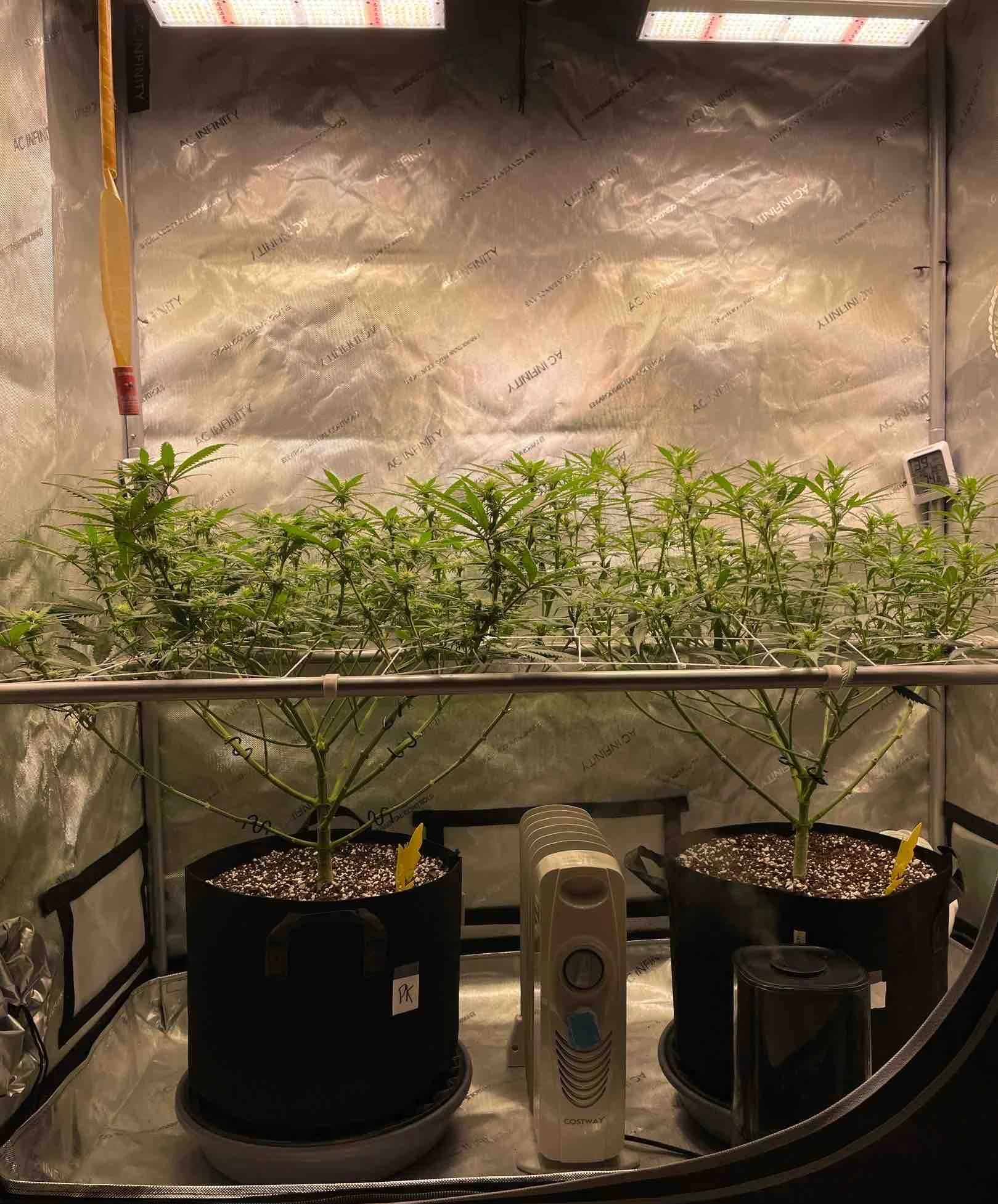
For growers who track plant behavior closely, this leaf posture often appears during peak photosynthesis periods shortly after lights turn on. In the image above, the lights have recently turned on and the plant was just watered with nutrients which resulted in the plant being “happy” and praying towards the light (although I would say a little too much in this instance).
The Biology Behind the “Praying” Effect
Plants constantly adjust their structure to maximize light absorption. This process is known as phototropism, the biological mechanism that causes plants to grow toward light sources.
In cannabis, leaf orientation is controlled by internal water pressure within plant cells, called turgor pressure. When conditions are favorable—adequate moisture, balanced nutrients, and proper light intensity—cells maintain optimal pressure and allow leaves to lift and orient themselves toward the light. The result is the upward posture growers often call praying.
Leaves angle upward because it allows them to:
- Capture more photons for photosynthesis
- Reduce shading between leaves in the canopy
- Improve gas exchange through stomata
From the plant’s perspective, this orientation improves energy production. From the grower’s perspective, it’s often a sign that environmental conditions are dialed in.
Why Healthy Cannabis Plants Often Pray
While genetics play a role, praying leaves usually appear when several environmental factors align properly.
Balanced Light Intensity
Cannabis plants respond strongly to light. When light intensity is within the optimal range for photosynthesis, leaves orient themselves to maximize exposure.
Too little light leads to flat leaves stretching outward. Too much light often produces symptoms like leaf tacoing or bleaching. When the intensity is just right, plants tend to show the upward leaf posture associated with praying.
Related: The HighWay’s picks for Best LED Grow Lights
Strong Root Health
Leaf posture is directly connected to what’s happening below the soil surface. Healthy roots maintain stable water uptake, which keeps cell pressure consistent throughout the plant.
When roots receive adequate oxygen and moisture, they can support the internal water movement necessary for leaves to maintain their structure.
Growers often notice that plants in well-aerated soil or properly managed hydroponic systems display stronger praying behavior.
Related: Growing Mediums for Cannabis
Proper Environmental Conditions
Temperature, humidity, and airflow also influence leaf behavior.
Cannabis plants thrive within a relatively narrow environmental range. When these variables fall into that ideal zone, plants function efficiently and often display the classic upward leaf posture.
Conditions that typically encourage healthy praying include:
- Stable temperatures during the light cycle
- Moderate humidity appropriate for the plant’s growth stage
- Consistent airflow across the canopy
When environmental stress occurs, leaves often lose this posture and begin to droop or curl.
When “Praying” Can Actually Signal a Problem
Although praying leaves are usually a positive sign, there are situations where extremely upright leaves may indicate stress rather than health.
One example is excessive light intensity. If the light source is too powerful or placed too close to the canopy, plants may angle their leaves sharply upward as a defensive response.
This can be accompanied by:
- Leaf edges curling upward
- Canoeing or taco-shaped leaves
- Slowed growth near the light source
Another possibility is excessive heat from grow lights. When temperatures rise too high near the canopy, plants adjust leaf angles in an attempt to regulate heat exposure.
This is why growers should interpret praying leaves within the broader context of plant health rather than relying on leaf posture alone.
How Growers Can Encourage Healthy Leaf Posture
While you cannot force cannabis plants to pray, you can create conditions where the behavior is more likely to appear.
Start by focusing on the core elements of plant health.
Light intensity should match the plant’s growth stage. Seedlings require far less light than flowering plants, and sudden increases in intensity can cause stress.
Root health is equally important. Soil that drains well and contains adequate oxygen allows roots to function efficiently, which supports healthy water movement throughout the plant.
Environmental stability also plays a big role. Seedlings often prefer it warmer and more humid while plants in flower would be best suited in slightly cooler and dryer environments. Any sudden fluctuations in temperature or humidity can disrupt plant physiology and affect leaf posture.
When these fundamentals are balanced, praying leaves often appear naturally as the plant reaches peak photosynthetic activity.
Frequently Asked Questions (FAQs)
Cannabis leaves appear to pray when they angle upward toward the light source. This posture occurs when plants are operating under favorable conditions that support efficient photosynthesis. Balanced light intensity, healthy roots, and stable environmental conditions typically produce this response.
Most of the time, yes. However, extremely upright leaves can occasionally indicate stress from excessive light intensity or heat. The key is to look for additional symptoms such as leaf curling, bleaching, or slowed growth.
Many growers observe praying behavior during the early portion of the light cycle when photosynthesis is most active. As the day progresses, leaves may gradually relax into a flatter position.
Not necessarily. Genetics influence plant structure and behavior, so some strains display the posture more noticeably than others. Environmental conditions also determine how strongly the effect appears.
Leaf praying is best viewed as a signal rather than a goal. Instead of trying to force the behavior, growers should focus on maintaining balanced environmental conditions, proper lighting, and healthy root systems.
Why Observing Leaf Posture Matters
Many cultivation guides focus heavily on nutrients and equipment, but experienced growers know that observation is one of the most valuable skills in cannabis cultivation.
Leaf posture can reveal subtle information about plant health long before serious problems appear.
Plants that consistently display healthy upward leaf angles are often operating near their optimal physiological range. Those that droop or curl may be signaling environmental imbalance.
By learning to read these visual cues, growers can respond quickly and maintain stable growing conditions.
Join us on The HighWay.
Helpful Links:
Is My Soil Healthy? How to Test and Improve Soil Health
Beginner’s Guide to Growing Weed at Home

Savage has been growing cannabis for 5+ years and founded The HighWay to share honest, tested information with the cannabis community.


Leave a Reply